
Irrigation System
In this activity, you will
learn about ancient structures built by engineers, and then build your own!
Supplies Required
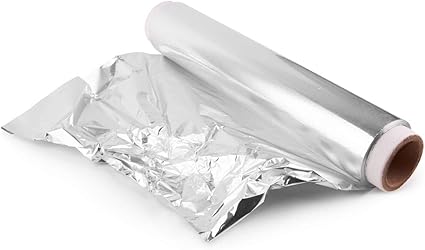
- Aluminum foil
- Large and small paper or plastic cups

- Craft sticks

- Scotch tape
- Marbles

- 1 liter of water
The Challenge
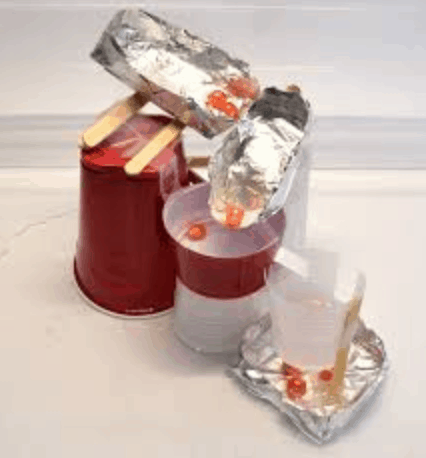
2,000-year-old structures can still be admired today. Civil Engineers design, construct and maintain for natural built environments including public works such as roads, bridges, canals, sewerage systems, pipelines and systems for water supply. In the read aloud Inca Engineering, you learn about the Inca an ancient/old powerful civilization, with lots of land and impressive engineering features- a part or quality of something, the face of something. For example , they built roads to connect their large empire. The Inca also built irrigation systems, which create an artificial supply of water to land. Since the Inca built their fields into the sides of mountains, they had to get very creative! The used gravity to help get the water where they wanted it! Today you will build a model of a terraced (raised piece of land) irrigation system (powered entirely by gravity) that uses flowing water to transport plastic beads or marbles. Beads or marbles must start at the top layer and must flow through each lower layer until they are trapped in the bottom layer.
Let’s Experiment and Build!
Instructions
- Choose an area where it’s okay if you spill water
- You must use all materials to build your machine
- There are no restrictions on the exact shape of each layer, but EACH LAYER must be at least 1 cm deep
- VERY IMPORTANT: the bottom of each layer must be above top of the next layer, as shown in the video
- Follow the guidelines given in the video and begin to build
- Many designs will work, so be creative!
- Test your design: start by pouring water only from the top-most layer, and add your beads or marbles
- If your design doesn’t work, make improvements and try again
- All beads/marbles must start at the top and rest at the bottom, but should not fall out of the machine
Think about it and Additional Resources
Why do you think the Inca chose this design? What was successful about your design and what needed to be changed? What are other things that have been built where engineering needed to be creative?
Read more about Irrigation Systems.
Share on social media: Record a video or take a picture of your activity
and post the results online using the hashtags:
#Irrigation
#ProjectExploration
#StemAtHome
Tag a friend and challenge them to do it, too!
For more activities like this one, go to www.projectexploration.org/stemhome. If you’re interested in learning more about Project Exploration and our free events, programs, and activities, please find us on social media and be sure to follow!
Call or text us for help: 312-772-6634
In this video, you will learn…
- About the Banaue Rice Terrace